
AI
CMG100 — AI 기반 실시간 인파 관리 솔루션
CMG100 개요
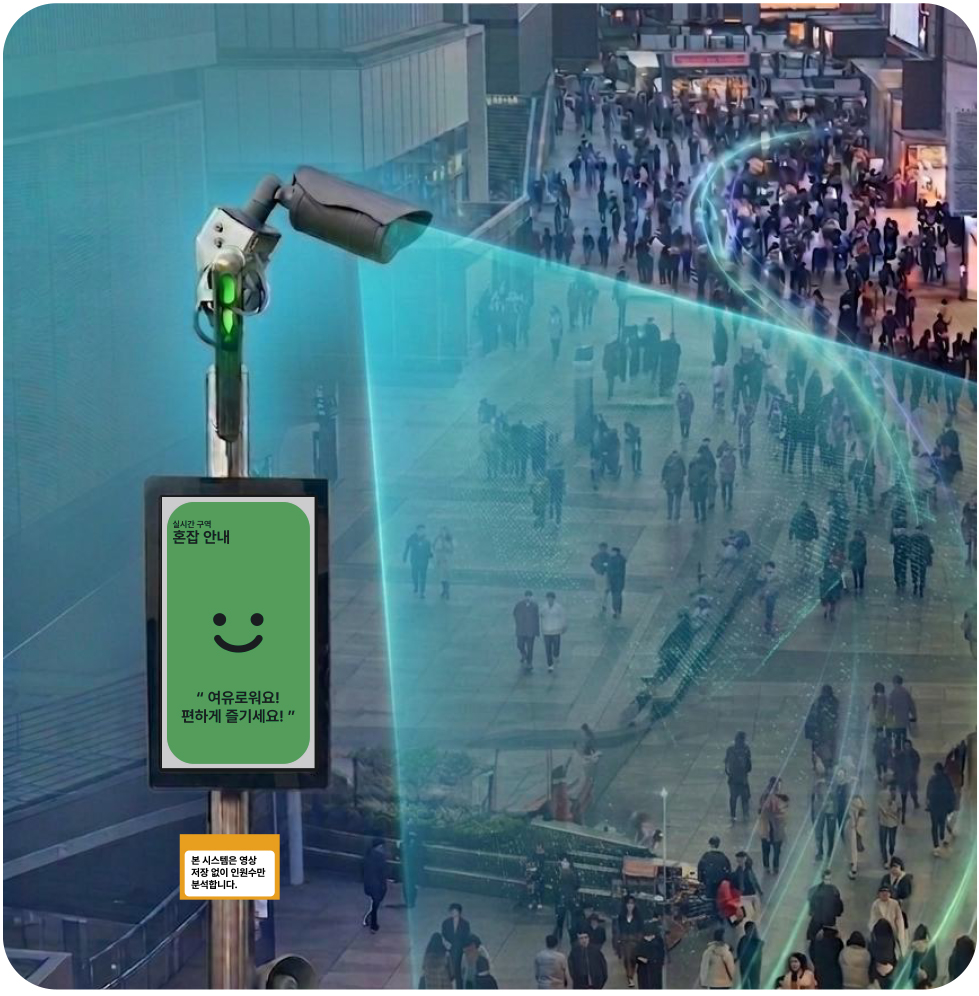
CMG100은 AI를 활용한 실시간 인파 관리 솔루션입니다.
기존의 CCTV 관제 방식은 관제요원의 육안 의존, 순간 밀집 상황 인지의 어려움,
사고 발생 후 대응 중심의 방식이 갖는 시스템적 한계가 있었습니다.
CMG100은 AI를 활용하는 실시간 계측 기반의 '자동경보'시스템입니다.
따라서 출입 인원 기반의 정량적 분석, 실시간 체류 인원 및 밀집도 계산,
임계치 도달 시 자동 경보의 시스템적 이점이 있습니다.
(기존 CCTV 관제 방식)
CCTV와 육안 관제의 한계
(CMG100 시스템)
실시간 계측 기반 '자동 경보'
주요 기능

출입 인원 실시간 카운트
· 구역별 출입 인원 실시간 계측
· 다중 출입구 환경에서도 인원 정보 통합 계측
실시간 군중 밀집도 분석
· 체류 인원 기반 밀집도(명/㎡) 실시간 산출
· 시간대별 혼잡도 변화 분석

임계치 기반 자동 경보
· 설정된 임계 인원 초과 시 자동 경보 발생
· 단계별 위험 수준 제공
(● 여유 → ● 주의 → ● 위험)
현장 독립형 실시간 처리
· Edge 기반 현장 데이터 실시간 처리
· 저지연 즉각적인 경보 대응
시스템 구성
RGB 센서장치
- · 영상 기반 출입 인원 감지 및 객체 인식
- · 저조도 환경에서도 안정적 인식 성능
분석 장치
- · 현장에서 실시간 데이터 처리
- · 개인정보 저장 없이 계측 데이터만 활용
송출장치
- · 스피커, 전광판을 통한 현장 경보 제공
- · SMS 및 외부 시스템과 연계 가능
적용 분야
- · 지역 축제 및 대형 행사장
- · 전통시장 및 상업시설
- · 지하철역, 환승센터, 교통시설
- · 체육시설, 공연장, 전시장
- · 학교, 캠퍼스, 공공청사
- · 관광지 및 야외 명소
일시적·반복적
인구 집중이 발생하는
모든 공간에
적용 가능합니다.
기대 효과
사고 예방 중심
안전 관리
운영 효율
향상
데이터 기반
의사결정
시민 체감
안전도 제고
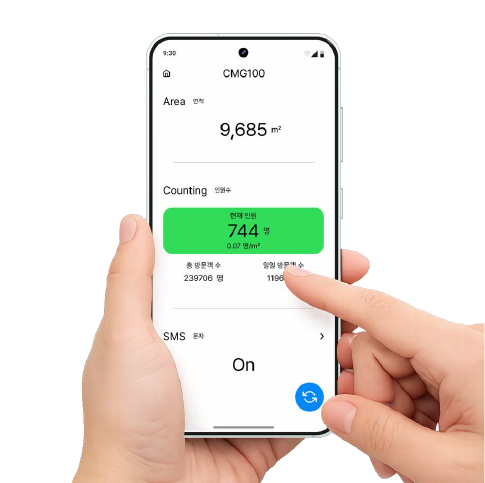
애플리케이션

인파관리 CMG
Android 애플리케이션
현장에서 누구나 직관적으로
확인 가능한 실시간 인파 모니터링
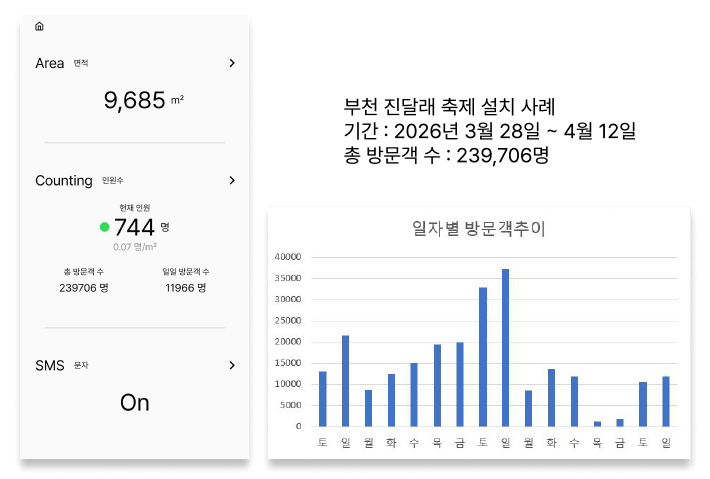
- · 현재 인원
- · 밀집도 (명/㎡)
- · 위험 상태 (여유 / 주의 / 위험)
운영시나리오
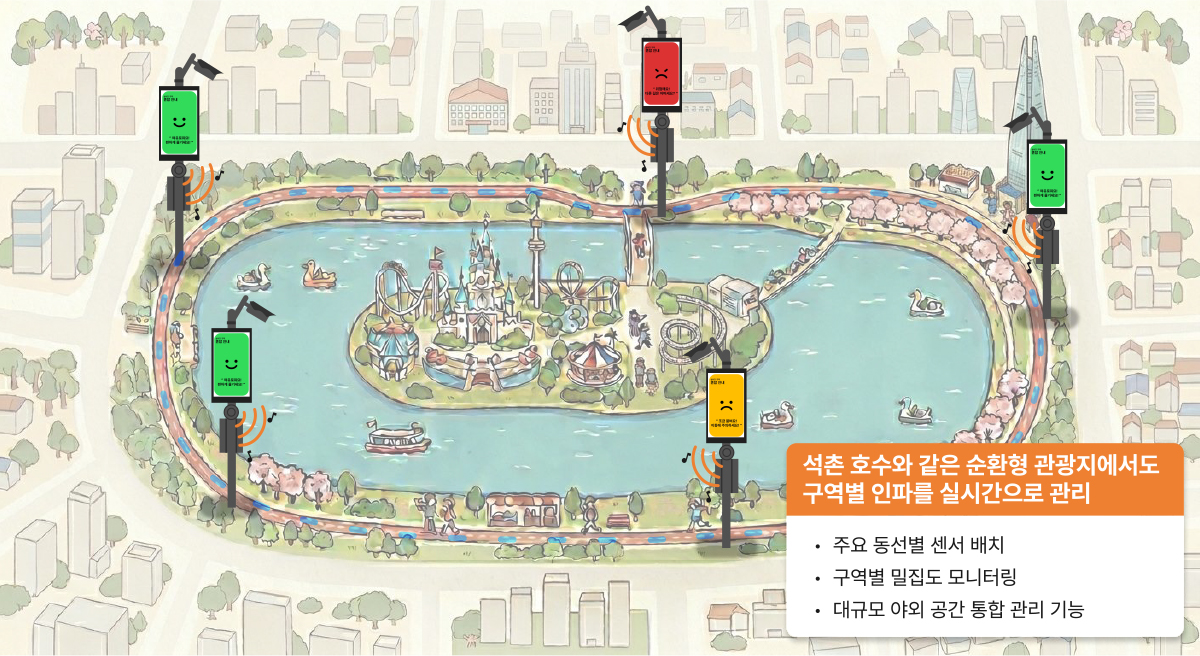
석촌 호수 인파 관리 구성 예시 (실제 사례 아님)
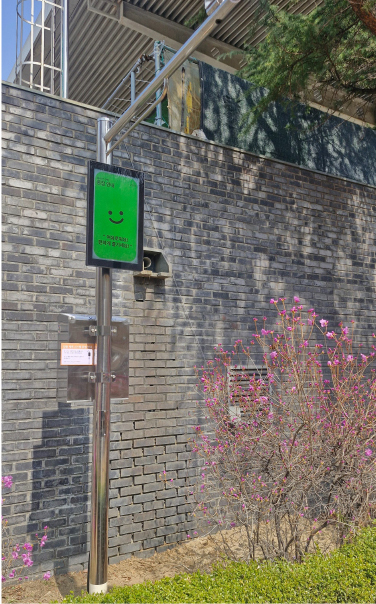
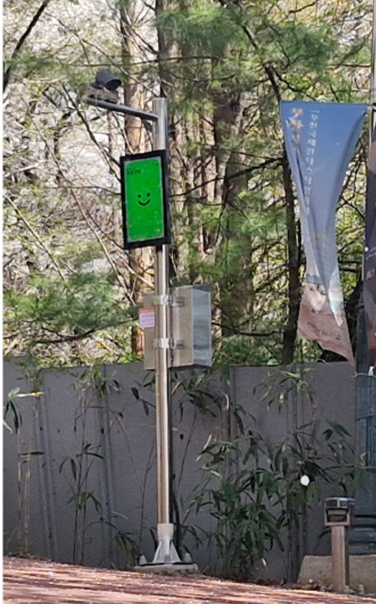
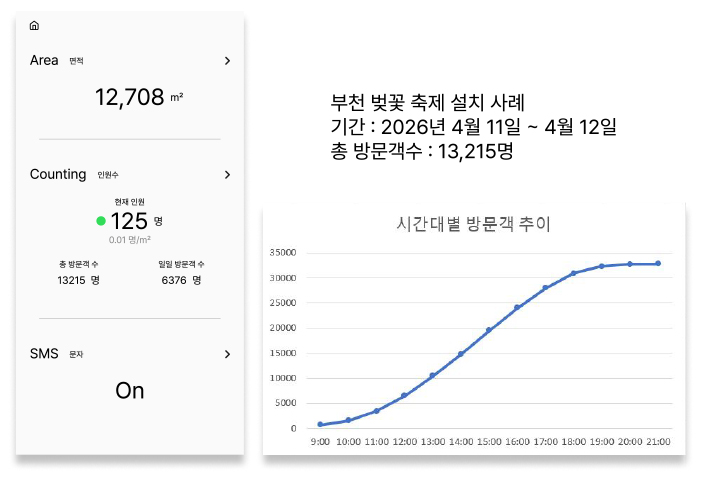
실제 설치 사례
Facial recognition
1.How facial recognition works
It is the process of identifying or verifying the identity of a person using their
face and It captures, analyzes and compares several features of a person's
face based on the person's facial details like facial landmarks, texture,
and geometry.
The face capture process transforms analog information (a face) into a
set of digital information (data or vectors) based on the features extracted
from the face.
The face match process compares the features extracted from two
different faces to determine if they belong to the same person or not.
Facial recognition will be used across various aspects of our lives in the future.

2. Why facial recognition, then?
It is easy to deploy and implement. There is no physical interaction
with the end-user. Moreover, face detection and face match processes for
verification/identification are speedy.
That is why Facial recognition is recognized as one of the most accurate
and easy ways for establishing individual identity across a wide range
of sectors.
Facial recognition technology provides highly-accurate, real-time access
control and the Access System is the latest technology adopted for keyless
and frictionless door entry.
And Facial recognition is used worldwide to prevent crime, detect fraud,
and enhance public safety.

Entrance & Register
Making an entrance at events

Ordering system
Letting people order with a simple face scan.

At hotel
Speeding up check In and Out

Biometric border
To identify who visits the country through it

Border and Access Control
Fast and accurate matches in airport
boarding and Access Control

Anti Facial Spoofing
Defend against a broad range of trying to trick the facial biometric identification
control systems to commit bank identity fraud.

Facial Recogition Systems

Gate Access Systems

Door Access Systems

Ordering system

Auto Check-in Systems

Anti Facial Spoofing Systems
Object Detection
1.How Object Detection works
It is the process of identifying or verifying the identity of certain defined
classes. Object detection models receive an image as input and output
an images with bounding boxes and labels on detected objects.
Image classification involves assigning a class label to an image,
whereas object localization involves drawing a bounding box
around one or more objects in an image.
Object detection is more challenging and combines these two tasks
and draws a bounding box around each object of interest in the image
and assigns them a class label. Together, all of these problems are
referred to as object recognition.

2. Why Object Detection, then?
There are many use cases for object detection in security and safety.
can be deployed on surveillance systems to constantly monitor for
security threats in locations like airports, stadiums, and transit systems.
Object detection can identify unauthorized access to businesses and
locations like construction sites, preventing theft.
It can monitor and improve safety in construction and industrial worksites
by placing virtual fences around hazardous areas that trigger alerts when
people cross certain thresholds.
It is to identify and locate one or more effective targets from still image
or video data. and It comprehensively includes a variety of important
techniques, such as image processing, pattern recognition, artificial
intelligence and machine learning.
And It can be used to monitor public spaces and identify potential threats,
such as weapons or suspicious behavior. ex) Person intrusion, loitering,
tailgating, fighting, falling, running, smoking, using mobile phone.
It allows self-driving cars to detect and recognize objects on the road, such
as other vehicles, pedestrians, and traffic signals.

Security & Safety
Quickly respond to Events and Emergencies systems to constantly
monitor for security threats in locations.

AI-Powered Video Analytics
AI based Behavior Analytics to detect Slip and Fall.

Foot Traffic Analysis
It can also monitor foot traffic outside the store and count how many people walk
by or stop to look at window displays.

Traffic Monitoring
Can also be used to monitor traffic and
road conditions in Smart cities.

People Counting
It is also useful for stores and other businesses like museums to keep
track of how many people enter and exit, monitoring specific areas to maintain desired capacity levels.

Parking Occupancy
Can identify open parking spaces in surface lots or parking garages and
be updated in real-time, alerting drivers of open spots with signs.

Vehicle Recogition Systems

Parking Recognaition Systems

Crowd counting Systems

Fall Detection system

Traffic Monitoring Systems

Security & Safety Systems